MASLD, previously known as non-alcoholic fatty liver disease, is increasingly framed as a “silent” condition because many people are asymptomatic. Globally, a 2026 systematic analysis linked to the Global Burden of Disease Study 2023 estimated that in 2023, approximately 1.3 billion individuals were living with MASLD, equal to 16.1% of the global population. The same analysis reported 3.6 million total disability-adjusted life-years (DALYs) attributable to MASLD worldwide in 2023, and it highlighted a key preparedness issue: lower Healthcare Access and Quality (HAQ) scores were associated with higher age-standardised DALY rates. That link makes health-system readiness, not just individual behavior, part of the story.
For Saudi Arabia, the regional signal matters. The GBD 2023 analysis reported that North Africa and the Middle East had the highest age-standardised MASLD prevalence rate among GBD regions, at 29,246.1 per 100,000 population in 2023 (with a 95% uncertainty interval of 26,848.3 to 32,048.7). This does not describe Saudi Arabia alone, but it provides an important context for why Saudi clinicians and policymakers are thinking about the next wave now. Another widely cited forecasting summary (based on the same research) projects that without major intervention, 1.8 billion people will have MASLD by 2050, reinforcing that the challenge is likely to intensify rather than plateau.
From Awareness Gaps to Earlier Detection in Primary Care
Saudi preparedness also has a “human factor” component: what people believe and what care pathways actually do. A 2025 national survey on MASLD awareness and management barriers in the Saudi population concluded that many Saudis are unaware of MASLD and have misconceptions about it. In that survey, barriers to management included the belief that lifestyle change alone suffices (46.7%), the absence of medical advice (46.7%), and insufficient disease awareness (33.3%). The authors called for targeted health education programs, better provider–patient communication, and stronger MASLD knowledge in primary care. This matters because underdiagnosis and undertreatment are recurring themes in how MASLD progresses quietly.
On the clinical side, Saudi Arabia is generating evidence on how to find risk earlier, even when standard tests look normal. A 2026 Saudi single-center retrospective study on PubMed described itself as the first real-world evidence from Saudi Arabia evaluating noninvasive fibrosis risk stratification in a primary care population with normal liver enzymes. Its conclusion was direct: relying on biochemistry alone may overlook clinically significant fibrosis, and incorporating tools such as FIB-4 and the AST:ALT ratio can support earlier identification and timely intervention. In practice, that supports a readiness playbook built around proactive screening for high-risk individuals and clearer referral patterns to gastroenterology services.
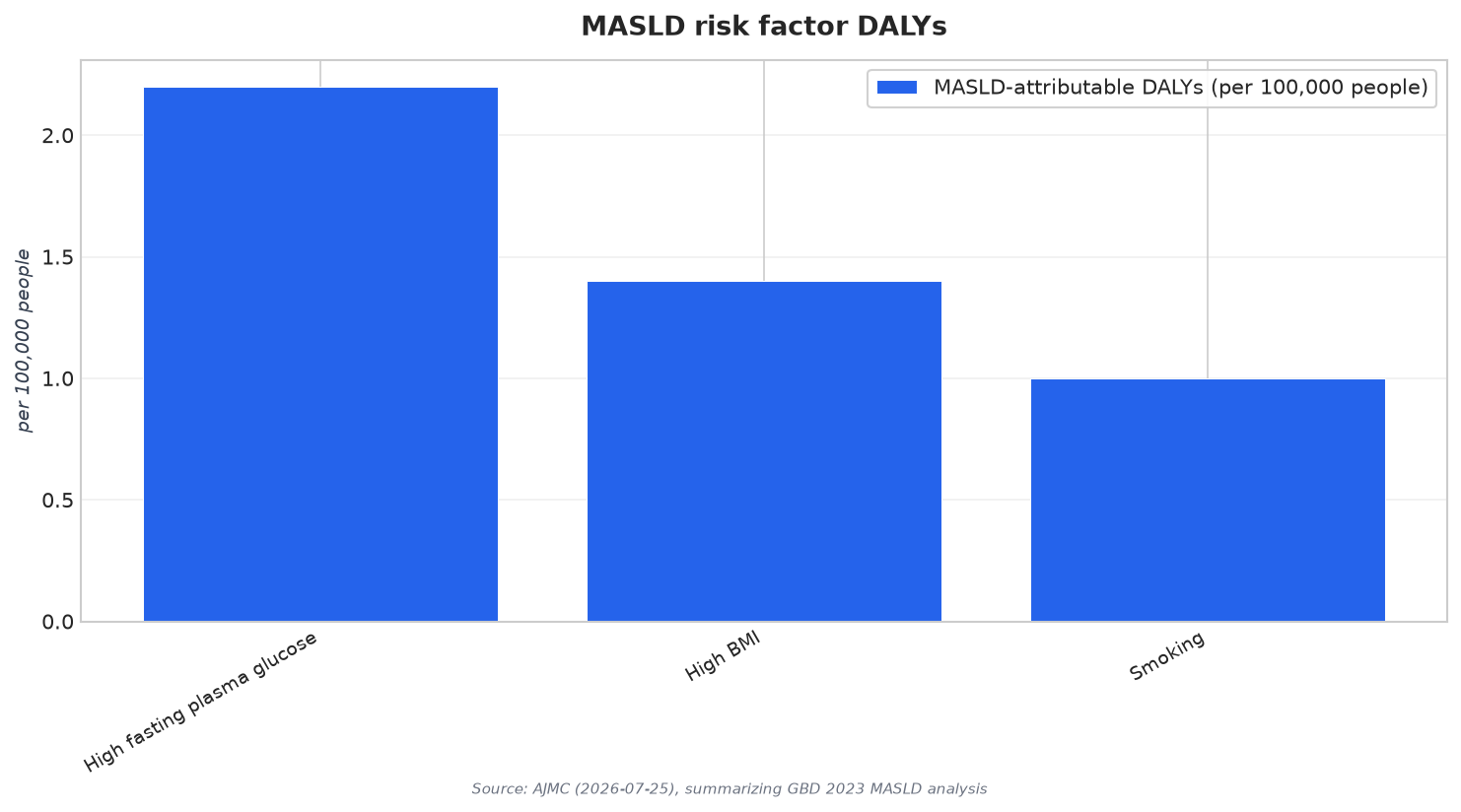
For people searching for Saudi fatty liver disease treatment, the direction of travel implied by the evidence is toward systems that detect MASLD before advanced fibrosis becomes the first clear sign. The global analysis also identified modifiable risk factors examined in comparative risk assessment: smoking, high BMI, and high fasting plasma glucose, with high fasting plasma glucose contributing the most to MASLD-related DALYs globally in 2023 (2.2 per 100,000 people), followed by high BMI (1.4 per 100,000) and smoking (1.0 per 100,000). Saudi Arabia’s preparation, as reflected in local survey findings and local screening research, points to a combined approach: close the awareness gap, strengthen primary care pathways, and use noninvasive risk stratification so fewer cases are missed while enzymes are still normal.
How common is MASLD worldwide according to recent estimates?
Why does the Middle East context matter when discussing Saudi Arabia’s MASLD preparedness?
What barriers to MASLD management were reported in a Saudi national survey?
What did Saudi real-world evidence suggest about screening when liver enzymes are normal?
What does Saudi fatty liver disease treatment preparedness emphasize, based on the sources?